

Want to know when I share a new recipe? Subscribe today!
Brown Rice Tabbouleh
Brown rice tabbouleh is fresh, filling, and packed with herbs, vegetables, and bright lemony flavour. Using brown rice gives this salad a little more substance while keeping everything light and refreshing, making it a brilliant option for lunches, barbecues, or as a side dish alongside grilled meats. It’s colourful, easy to prepare, and especially handy when you want a salad that can comfortably hold its own rather than simply sitting quietly on the side of the plate.


Brown Rice Tabbouleh
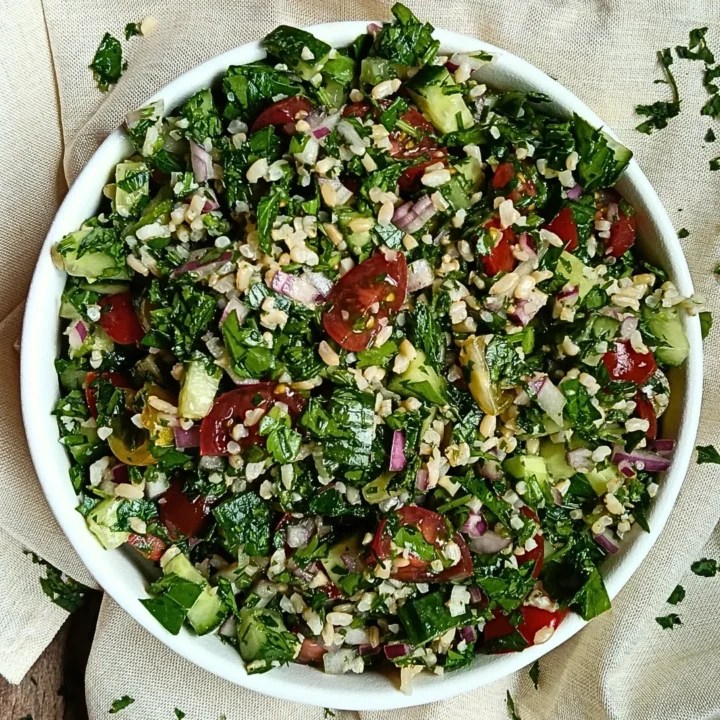
This Brown Rice Tabbouleh recipe is a fresh take on the traditional salad, swapping bulgur for nutty brown rice to make it gluten free. Packed with parsley, cucumber, tomato, and fresh lemon, it's light yet satisfying. I love it as a side with grilled meats or falafel, but it's also a brilliant lunch in it's own right. Refreshing, vibrant, and full of texture, it's a wholesome salad that proves gluten free food can still taste amazing.
Ingredients
- 200g cherry tomatoes, quartered
- 1/2 tsp table salt (see notes)
- 1 small red onion, finely diced
- 1 continental cucumber, diced
- 75g cooked brown rice, finely chopped
- 1 bunch (50g) flat-leaf parsley, finely chopped
- 1 tsp sea salt flakes
- Juice of 1 lemon
- 1 tbsp extra virgin olive oil
Instructions
- Place the quartered tomatoes in a sieve and sprinkle with the table salt. Set aside to drain for 30 minutes. Discard any juice that drains off.
- Add the drained tomatoes, red onion, cucumber, brown rice, and parsley to a large bowl.
- Drizzle over the lemon juice and extra virgin olive oil and toss well to combine. Season with sea salt flakes to taste.
- Serve immediately or refrigerate until needed.
Notes
- Salting and draining the tomatoes draws out excess liquid, which keeps the salad fresh rather than soggy. Don't skip this step and don't rush it. Thirty minutes makes a real difference.
- Make sure the brown rice is well cooked and completely cooled before adding it to the salad. Chopping it finely helps it integrate into the salad and mimics the texture of the traditional bulgur wheat used in a classic tabbouleh.
- Traditional tabbouleh is very heavy on the parsley. Don't be tempted to reduce it. The parsley is the hero of this salad, not a garnish.
- Chop everything as finely and evenly as you can. Tabbouleh is all about a uniform, fine chop that means every forkful has a bit of everything in it.
- Deseeding the cucumber before dicing also helps prevent excess liquid in the salad. Run a teaspoon down the centre of each half to scoop out the seeds.
- This salad is naturally gluten free, which makes it a brilliant alternative to traditional bulgur-based tabbouleh for anyone avoiding gluten.
- A good quality extra virgin olive oil makes a noticeable difference here. With so few ingredients, each one needs to count.
- This salad keeps well in an airtight container in the fridge for up to 2 days, making it great for meal prep. The flavours actually improve as it sits. Give it a good stir and a fresh squeeze of lemon before serving.
- Not suitable for freezing as the fresh herbs and cucumber will turn mushy after defrosting.
What I Cook With
As an Amazon Associate and member of other affiliate programs, I earn from qualifying purchases.


Nutrition Information:
Yield:
4Serving Size:
1Amount Per Serving: Calories: 90Total Fat: 4gSaturated Fat: 1gTrans Fat: 0gUnsaturated Fat: 3gCholesterol: 0mgSodium: 884mgCarbohydrates: 13gFiber: 3gSugar: 6gProtein: 3g
Please note, this nutrition information is to be used as a guide only. Nutrition information isn’t always accurate.
Serve this with
- Serve alongside my Paprika Lamb Cutlets for a fresh, filling dinner. The herbs and lemon balance the warm paprika beautifully, while the brown rice makes the salad substantial enough to hold its own.
- Pair with Persia Creamy Chicken for an easy Mediterranean-inspired meal. The yoghurt sauce adds creaminess while the tabbouleh brings freshness, herbs and plenty of texture.
- Add to a mezze spread with my Air-Fryer Halloumi Fries, hummus and olives. It’s a brilliant make-ahead salad that gives the whole spread something fresh and substantial.
Want to know when I share a new recipe? Subscribe today!
Oh Look, Another Salad…
Today I’m finally sharing my brown rice tabbouleh recipe – it’s gluten free, super fresh, and honestly a bit less fussy than my quinoa tabbouleh. Tabbouleh has always been my favourite salad, and it takes me straight back to my childhood every time I make it. When I found out I was celiac, brown rice was the first substitute I reached for to replace bulghur wheat. It just works. I buy the pre-cooked packets from the supermarket (because effort is overrated) and then give it a rough chop with my mezzaluna. You’d never know it wasn’t traditional. Brown rice tabbouleh has become a go-to in my kitchen, especially when I want something nourishing but easy and can’t be bothered with Quinoa.
I’d love to say the delay in sharing this brown rice tabbouleh recipe was intentional, but nope. I cooked a stack of recipes back in August (this one included which was served with my Persian Yoghurt Chicken), intending to post regularly. But then some didn’t get photographed, and others just sat on my laptop untouched. Add to that the fact that my groceries have been hit and miss – I don’t drive, so I rely on deliveries – and you can see how everything just slipped away a bit. One week, the delivery team forgot an entire bag, and of course, it was the one with all the vegetables I needed for a goat goulash. I’ve also been grappling with the weather – it swings from sunny to freezing without warning. And living alone means I can’t just make a massive salad and hope someone else eats the leftovers. Brown rice tabbouleh deserves to be enjoyed fresh, not limp and sad from the fridge.
Things went further downhill when the plumbers installed a new hot water system that blocks half my kitchen window. My happy little space now feels like a cave, and because I rent, I can’t do a thing about it. I’d just finished restyling the kitchen into a cute, joyful haven, and now it’s grey and gloomy. Still, the silver lining is that I’ve been putting effort into eating better. Brown rice tabbouleh has been on heavy rotation as part of that. I’ve given up wine, sorted out my weekday meals, and I’m working out daily. Basically, I’m in my glow-up phase.

Why Brown Rice Tabbouleh is a whole vibe
I love this brown rice tabbouleh recipe because it doesn’t demand precision. It’s hearty enough for a meal, fresh enough for a side, and easy enough to throw together between Teams-calls. The brown rice gives it a lovely nutty chew that holds up well, even if I forget it in the fridge for a day or two. I can bulk it up with protein, throw in a few extra veggies, or keep it classic. Thankfully, the lemon juice and herbs do all the heavy lifting.
Because the brown rice is pre-cooked, brown rice tabbouleh comes together in minutes. And using my mezzaluna to roughly chop everything gives it that slightly rustic feel. Not too perfect, not too fussy. Just right. I also find that it keeps me feeling satisfied without weighing me down, which is the vibe I want lately. No more heavy lunches that make me want to nap at my desk. This salad wakes me up.
And it travels well. Brown rice tabbouleh is one of those dishes I can make the night before and not worry about. It actually gets better after sitting in the fridge, the flavours soaking into the rice. I just give it a little fluff and maybe add an extra squeeze of lemon if it needs it. It’s been a lunch saviour more times than I can count.

This Month Has Been A Lot
I think brown rice tabbouleh has become a bit of a comfort food for me. Not in a warm and creamy kind of way, but in a nourishing, grounding way. This past month has been a lot both emotionally and practically. Between work, the weather, and house things going wrong, I’ve been feeling a bit frayed at the edges. Eating something fresh and healthy that I made myself helps more than I expected.
It’s also been a month of shedding. Not just the goat goulash dreams that never came to be (yet), but people too. There’s been a quiet clarity settling in. I realised I don’t want to spend time with people who leave me feeling small or exhausted. It’s not about conflict, just a gentle stepping away. I’m being more deliberate with who and what I make space for. And brown rice tabbouleh has weirdly become part of that little ritual of choosing better.
Choosing to make something that tastes like sunshine, even when it’s grey outside, feels like a small act of rebellion. A way of saying I’m still showing up for myself, even when things aren’t going to plan. I might not be able to control the plumbing, or the weather, or missing grocery bags – but I can make brown rice tabbouleh, and that counts for something.

Frequently asked questions
Why does the brown rice need to be finely chopped?
Traditional tabbouleh uses bulgur wheat, which has a fine, almost grainy texture that integrates into the salad rather than sitting as distinct pieces. Finely chopping the cooked brown rice mimics that texture and means it distributes evenly through every forkful rather than clumping together or overwhelming the parsley and herbs.
Why is there so much parsley?
Because tabbouleh is a parsley salad with additions, not a grain salad with parsley in it. The parsley is the hero and the bulgur or rice is the supporting ingredient. Don’t reduce it. A tabbouleh that’s heavy on grain and light on parsley is missing the point of the dish entirely.
Why do the tomatoes need to drain for 30 minutes?
Tomatoes release a significant amount of liquid once they’re salted and cut, and that liquid will make the salad soggy and dilute the lemon and olive oil dressing within minutes. Draining for the full thirty minutes removes that liquid before it gets into the salad, which is what keeps everything fresh and vibrant rather than wet and flat.
Ingredient breakdown
Cherry tomatoes
Quartered, salted, and left to drain in a sieve for thirty minutes before anything else happens. The salt draws out the excess liquid and concentrates the flavour of the tomatoes at the same time, which means they contribute sweetness and acidity to the salad rather than wateriness. Discard whatever drains off and don’t rush the process.
Brown rice
Cooked, completely cooled, and finely chopped before it goes into the salad. The fine chop is what makes brown rice work as a bulgur substitute, giving it a texture that integrates into the salad rather than sitting as distinct grains. Make sure it’s fully cooled before it goes in or it will wilt the parsley and start warming the other ingredients.
Flat-leaf parsley
A full bunch, finely chopped, which makes it the dominant ingredient in the salad rather than a supporting one. This is correct and intentional. Tabbouleh is primarily a parsley salad and reducing the parsley to make it feel more like a grain salad loses the whole point of the dish. Chop it as finely as you can so it distributes evenly through every forkful.
Red onion
Finely diced and added raw, which provides a sharp, slightly pungent contrast to the fresh parsley and the sweet drained tomatoes. Finely diced rather than roughly chopped so it integrates into the salad rather than dominating individual bites.
Continental cucumber
Deseeded before dicing, which is the second moisture-management step alongside salting the tomatoes. Run a teaspoon down the centre of each halved cucumber to scoop out the seeds before dicing. Continental cucumber has a thin skin and almost no seeds compared to other varieties, which makes it better suited to a finely chopped salad like this.
Lemon juice
The acid component of the dressing, adding a bright citrus sharpness that lifts all the fresh herbs and vegetables and ties the whole salad together. Fresh lemon juice only, squeezed over just before serving. If the salad has been refrigerated, a fresh squeeze before serving brings it back to life.
Extra virgin olive oil
The fat component of the dressing, adding richness and helping the lemon juice coat everything evenly. Use a good quality extra virgin here because it’s going on raw in a simple salad where it’s directly present in every bite.
Table salt and sea salt flakes
Used at two different points for different reasons. The table salt goes on the tomatoes at the draining stage because it dissolves quickly and draws out moisture efficiently. The sea salt flakes season the finished salad to taste after everything is combined.

